AI & Automation
AI Chatbot Development: Cost, Stack and Roadmap
A buyer's roadmap for building a chatbot that answers accurately, hands off safely and improves after launch.
The short answer
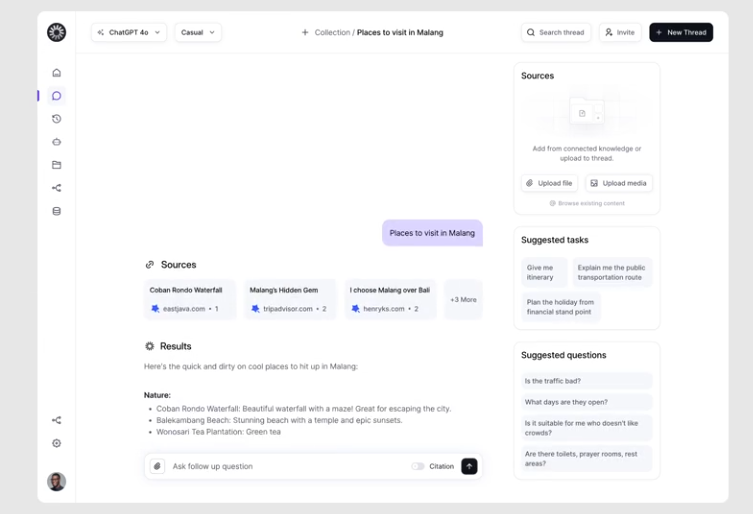
A useful AI chatbot begins with a narrow job, a trusted source of information and a clear escape route when it cannot help. Choose rules for predictable transactions, retrieval for answers grounded in approved knowledge, and tool use only when the assistant must take controlled actions. Budget and timeline are driven less by the chat box than by integrations, permissions, evaluation, content readiness and post-launch monitoring.
Key takeaways
- Scope the assistant around one audience and one useful job.
- Use deterministic flows wherever a result must be predictable.
- Enforce permissions outside the model and test retrieval independently.
- Include evaluation and human handoff in the first release, not a later phase.
Define the job before choosing the chatbot stack
Write the chatbot's job as a user outcome: help a customer find an approved policy, qualify a request, guide an employee through a process or perform a specific account action. This exposes the information and authority the assistant needs. A broad instruction to answer anything creates unclear expectations and makes quality difficult to measure.
Document what the chatbot must refuse, when it should ask a clarifying question and where a person takes over. Include channel and audience because an internal support assistant and a public sales assistant require different permissions, tone, evidence and escalation paths.
- One named audience and primary outcome
- Approved sources and prohibited topics
- Actions the assistant may take, suggest or never perform
- A visible route to human support
Choose rules, retrieval or controlled tool use
Rules and forms remain the best option for deterministic paths such as collecting required fields. Retrieval-augmented generation is appropriate when users ask varied questions and answers must be grounded in a maintained knowledge base. Tool use can support actions such as checking an order, but every tool needs input validation, authorization and a confirmation policy.
These approaches can coexist. A conversation may use retrieval to explain a policy, a deterministic form to collect details and a protected tool to create a ticket. Keep each responsibility visible so the team can test it independently and change one layer without rebuilding the entire assistant.
Prepare knowledge, identity and permissions
A chatbot cannot repair conflicting source material. Assign content owners, remove obsolete documents and attach useful metadata such as audience, region and effective date. Retrieval tests should verify that the system finds the right passage before model wording is evaluated.
For private information, connect every request to an authenticated identity and enforce authorization outside the model. Do not rely on a prompt to hide restricted records. Record the minimum operational data, remove secrets from logs and establish retention rules before inviting real users.
- Identify the canonical source for each topic
- Test document retrieval separately from answer generation
- Apply permissions at the data and tool boundary
- Show citations or source links when they help users verify an answer
Estimate cost and timeline from real drivers
The visible interface is often the smallest part of the work. Estimates should account for content cleanup, identity, integrations, conversation design, evaluation cases, analytics, operational controls and stakeholder review. Model usage is one running cost, but support, knowledge maintenance and quality review also need owners.
Use stage gates: approve the experience and evaluation plan, prove retrieval, test a private pilot, harden production and then expand. This makes uncertainty explicit and allows the team to stop or revise the approach before a complex rollout.
Evaluate answers, handoff and production behavior
Create a test set from real question patterns, including ambiguous requests, missing information, adversarial instructions and topics the assistant must decline. Review groundedness, usefulness, tone, escalation and tool correctness separately. A single average score can conceal a serious failure in a sensitive category.
Launch to a controlled audience with feedback and traceable versions. Monitor failed retrieval, repeated reformulation, abandoned sessions, escalations and tool errors. Review examples regularly, update the source or workflow that caused the issue and retest before releasing the change.
From our verified catalogue
Related Dragside services
Frequently asked questions
- Does an AI chatbot need company data?
- Only if its job depends on company-specific knowledge or account context. Public-information assistants may not need private data. When internal information is required, use approved sources, identity-aware retrieval and documented retention rather than copying an unrestricted collection into a prompt.
- Can an AI chatbot connect to a CRM or support desk?
- Yes, through controlled APIs or tools. The surrounding application must validate inputs, authenticate the user, limit allowed actions and confirm consequential changes. Start with read-only access or draft creation when the operational risk of an automatic action is still uncertain.
- How do you reduce incorrect chatbot answers?
- Narrow the scope, improve source quality, retrieve evidence, require citations where useful, test representative and adversarial questions, and provide a safe refusal or handoff. Monitoring is essential because content and user behavior change after launch.
Related guides
How to Hire an AI Integration Consultant in 2026
Know what to prepare, what expertise to verify and how a production-ready AI engagement should be structured.
Read guide
Automate Workflows With Custom Internal Tools
Turn repetitive work into a reliable system without automating broken processes or removing necessary human judgment.
Read guidePrompt Engineer vs AI Consultant: Who Do You Need?
Choose the right expertise by deciding whether the problem is a prompt, workflow, integration or wider operating-model decision.
Read guideFrom idea to delivery