AI & Automation
How to Hire an AI Integration Consultant in 2026
Know what to prepare, what expertise to verify and how a production-ready AI engagement should be structured.
The short answer
Hire an AI integration consultant when the challenge is larger than choosing a model or writing a prompt. A capable consultant should connect a valuable workflow to usable data, measurable quality, secure system boundaries and a clear production owner. Begin with one bounded use case, ask candidates to explain how they will evaluate it, and require a plan for failure handling, monitoring and handover before approving a prototype.
Key takeaways
- Start with one bounded workflow and an observable outcome.
- Evaluate candidates on system judgment, not prompt vocabulary.
- Require evaluation, failure handling, monitoring and handover before production.
- Choose a conventional solution when it is more reliable than AI.
What an AI integration consultant should deliver
The useful output is a decision-ready system plan, not a presentation filled with AI terminology. Discovery should identify the user, the decision or task being supported, the source systems involved and the cost of an incorrect result. The consultant can then recommend whether AI is appropriate and define a small first release with explicit boundaries.
A complete engagement normally connects strategy and delivery. It should leave the team with requirements, an architecture outline, evaluation examples, security decisions, operating responsibilities and a roadmap. If implementation is included, the same artefacts become acceptance criteria rather than documents that disappear after discovery.
- A prioritized use-case map tied to a real business workflow
- Data, integration, permission and retention requirements
- Evaluation criteria covering quality, safety and user experience
- A phased delivery, monitoring and ownership plan
Decide which workflow is ready for AI
The best starting workflow has useful source information, a repeatable pattern and a human who can judge the output. Avoid beginning with a vague ambition such as automating the whole company. Map one current process from trigger to outcome, including exceptions, approvals and the places where staff already apply judgment.
Score opportunities using value, feasibility and consequence. A frequent task is not automatically a good candidate if the available data is unreliable or a mistake would be difficult to reverse. A consultant should be willing to recommend conventional automation, search or interface improvements when they solve the problem more predictably.
- Name the user, trigger, input, desired output and current pain
- List examples of acceptable, weak and unacceptable results
- Identify decisions that must remain with a person
- Choose a pilot whose effect can be observed without broad disruption
Consultant, freelancer or delivery team?
A focused freelancer can be effective when the use case, data and surrounding software are already understood. A consultant is valuable when the organization first needs to choose the right problem, align stakeholders or establish governance. A multidisciplinary delivery team is the safer fit when the work includes product design, backend integration, security, deployment and ongoing operations.
Choose according to responsibility rather than job title. Ask who will design the user experience, build integrations, review data access, run evaluations and respond after launch. If those responsibilities are spread across several suppliers, establish one technical owner and document every handoff before work begins.
Questions that reveal production experience
Strong candidates explain trade-offs in plain language and ask about failure before discussing a model. Give each candidate the same short scenario and listen for questions about users, permissions, source reliability, latency, evaluation and fallback behavior. A polished demonstration is useful, but it does not prove that the underlying system can be operated safely.
Review relevant artefacts with confidential details removed: an evaluation rubric, architecture decision, monitoring view or handover checklist. Do not require invented client metrics. Instead, ask what changed during the project, how uncertainty was handled and what evidence justified the final design.
- How will you establish a non-AI baseline?
- What happens when the model, tool or data source is unavailable?
- How will users correct or escalate an answer?
- Which decisions and assets will our team own at handover?
Move from prototype to monitored production
Treat the prototype as an experiment with a decision at the end. Test it against representative examples, record the types of failure and confirm that the proposed benefit survives real workflow constraints. Production approval should depend on evidence, not on whether a short demonstration looks impressive.
Before launch, define access controls, data handling, model and prompt versioning, logs that exclude unnecessary sensitive content, operational alerts and a rollback path. Assign an owner for quality review and cost review. The result is a service the team can improve deliberately rather than an opaque feature nobody feels responsible for.
From our verified catalogue
Related Dragside services
Frequently asked questions
- How much does AI integration consulting cost?
- There is no responsible universal figure because scope changes with data readiness, integrations, security review, evaluation depth and implementation responsibility. Ask for a staged estimate that separates discovery, prototype, production hardening and ongoing operation so each decision can be approved with evidence.
- What data is required for an AI integration?
- That depends on the workflow. Prepare representative inputs, expected outputs, permission rules, retention requirements and examples of edge cases. The consultant should request only the data needed for the agreed purpose and document how it will be accessed, protected and removed.
- How long does an AI integration take?
- A timeline should be based on discovery, access approvals, integration complexity, evaluation and launch controls rather than a generic promise. A bounded pilot can be planned separately from production, with explicit gates that prevent an untested prototype from quietly becoming a live dependency.
Related guides
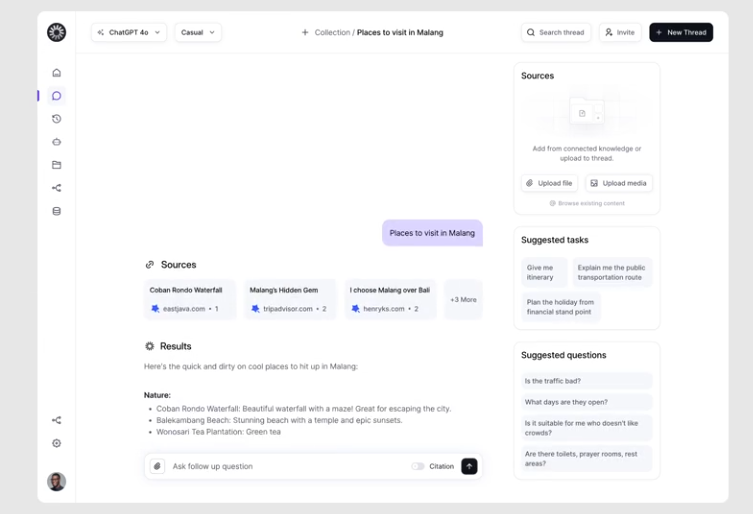
AI Chatbot Development: Cost, Stack and Roadmap
A buyer's roadmap for building a chatbot that answers accurately, hands off safely and improves after launch.
Read guide
Prompt Engineer vs AI Consultant: Who Do You Need?
Choose the right expertise by deciding whether the problem is a prompt, workflow, integration or wider operating-model decision.
Read guideAutomate Workflows With Custom Internal Tools
Turn repetitive work into a reliable system without automating broken processes or removing necessary human judgment.
Read guideFrom idea to delivery