
Software Development
Ecommerce Website Development That Converts
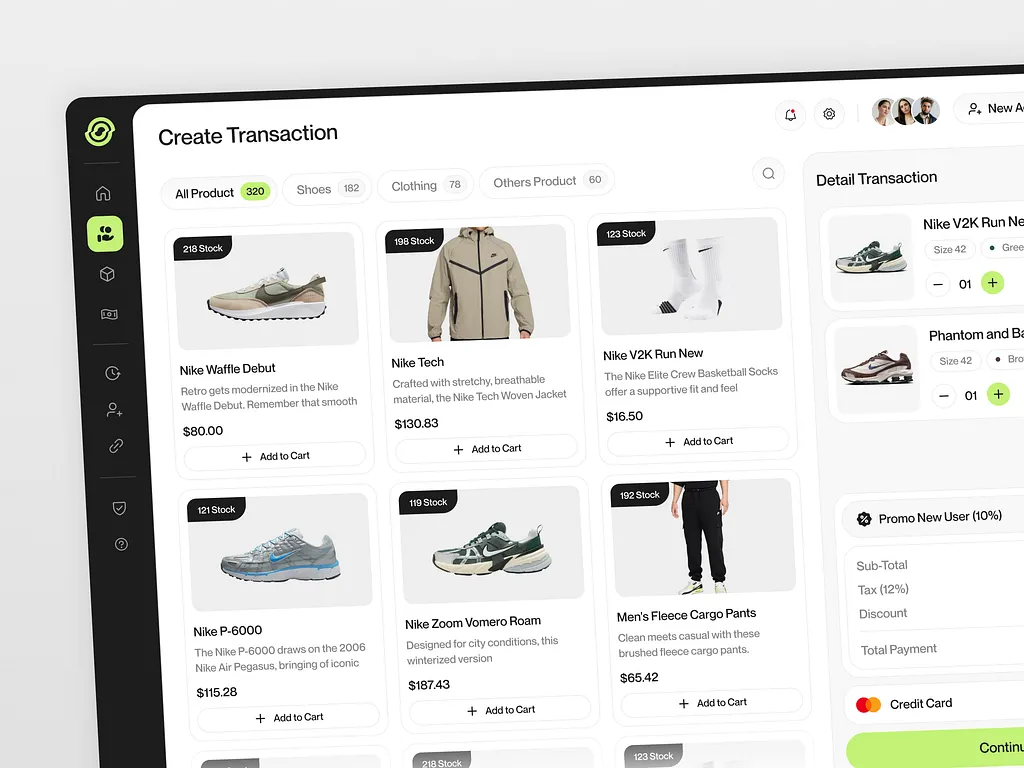
Build a commerce experience around customer decisions instead of treating the storefront as a collection of templates.
The short answer
Develop an ecommerce site around the customer's path from product discovery to a confirmed order. Select a platform only after defining catalogue complexity, inventory ownership, payment regions, fulfilment, promotions and editorial needs. Protect mobile speed, communicate total cost and delivery clearly, and instrument the journey so improvements are based on observed friction rather than decorative redesigns.
Key takeaways
- Select the platform from catalogue and operating requirements.
- Design discovery and checkout around customer questions and recovery.
- Treat orders, payments and inventory as reliable server-side workflows.
- Use validated journey data to guide improvements after launch.
Choose a commerce platform from operating needs
Document product types, variants, markets, currencies, tax responsibilities, inventory systems, fulfilment and staff roles. A hosted platform can remove substantial operational work when its model fits. A headless or custom build is justified only when experience or integration requirements outweigh the added ownership.
Include daily catalogue and order operations in the evaluation. Merchandisers need safe previews, bulk edits and understandable publishing; support teams need reliable order context; engineers need supported extension points. The best technical choice is one the whole operating team can sustain.
- Catalogue, variant and pricing complexity
- Payment, tax, shipping and return regions
- Inventory and fulfilment source of truth
- Content, promotion and approval workflow
Reduce uncertainty in cart and checkout
Show item details, availability, delivery expectations and known charges before the final step. Preserve entered information when validation fails and explain how to correct it. Guest checkout can reduce account friction, while optional account creation can follow a successful purchase when appropriate.
Treat discounts, tax, shipping and payment callbacks as business-critical code. Test duplicate submissions, expired sessions, delayed confirmation and payment failure. An order must never depend on the browser displaying a success screen to become valid.
- Clear totals and delivery information
- Accessible field labels and actionable errors
- Idempotent order and payment handling
- Confirmation through a trusted server-side state
Protect mobile performance and accessibility
Optimize image dimensions and formats, limit third-party scripts and reserve space so content does not jump while loading. Test on constrained networks and real device sizes, not only a fast desktop. Performance work should preserve useful imagery rather than simply removing product context.
Keyboard access, visible focus, readable contrast, form semantics and meaningful image alternatives support more customers and reduce fragile interactions. Include these requirements in component acceptance criteria so they survive future campaigns and templates.
Measure the journey and improve deliberately
Define events for meaningful steps such as useful search, filter use, product comparison, cart change, checkout error and confirmed purchase. Validate analytics against real orders and exclude internal traffic where practical. Numbers without trustworthy definitions can send the team toward the wrong problem.
Combine journey data with support themes, user research and technical errors. Prioritize changes that address a clear barrier, release them with an expected outcome and review the result. Conversion improvement is an operating discipline, not a single launch task.
From our verified catalogue
Related Dragside services
Frequently asked questions
- Should an ecommerce site be custom built or use a hosted platform?
- Use a hosted platform when its catalogue, checkout, integration and editorial model meet the need; it removes significant commodity work. Consider custom or headless delivery when a demonstrably important experience or system constraint cannot be supported responsibly by extensions.
- Which ecommerce integrations are essential?
- The answer follows operations, but common boundaries include payment, tax, inventory, fulfilment, customer support and analytics. Establish a source of truth for each domain and design reconciliation for delayed or failed synchronization.
- How should ecommerce performance be tested?
- Test representative category, search, product and checkout journeys on mobile viewports and constrained connections. Measure production-like pages with real media and third-party scripts, and pair lab tests with field monitoring after launch.
Related guides

High-Converting Web Design: From Brief to Launch
A conversion-focused web-design process grounded in user decisions, useful content and production performance.
Read guide
Full-Stack Web App Development: A Buyer's Guide
A practical build guide for founders and teams turning requirements into a production-ready web application.
Read guide
Social Media Ad Creative That Supports Campaigns
Move from isolated posts to a campaign system that can produce, test and learn without weakening the brand.
Read guideFrom idea to delivery